Not The Indians You’re Used To with Meegwun Fairbrother
SEASON 2 | EPISODE 6
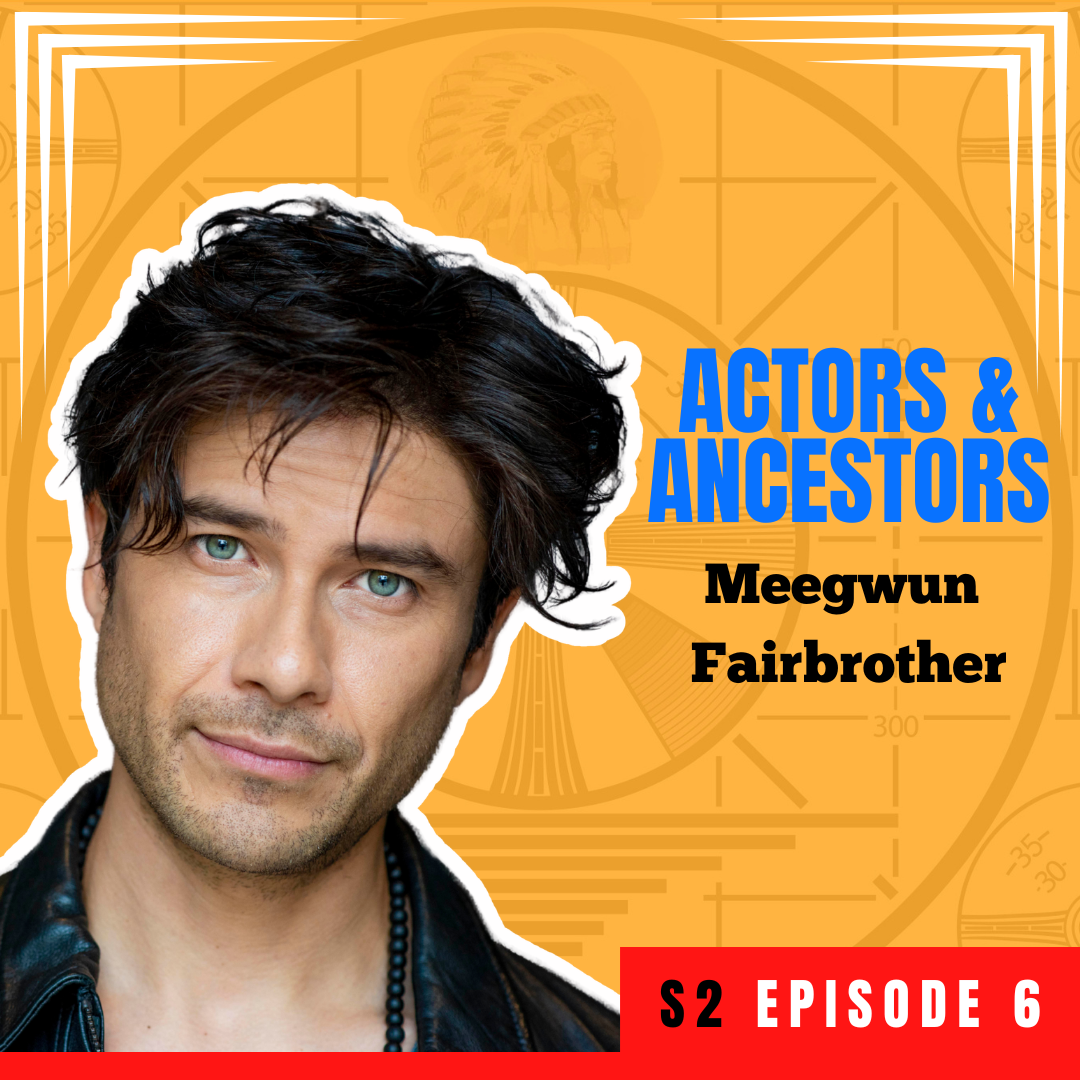
Meegwun Fairbrother | Photo credit: Kevin McIntyre
Meegwun Fairbrother (Ojibwe) plays William Mitchell on Netflix's remake of Little House on the Prairie (out now!). He shares about growing up on the land, learning resilience, mentoring young people, and the one time he had to make his own costume as a struggling actor starting out in the industry. Meegwun tells JD about how hard it is not being called back again for roles you loved and celebrating each other's wins when they do happen — the right role will come to you when the time is right!
Listen on this page or pick your favourite podcast player here.
-
Meegwun Transcript
JD: Welcome back to Actors and Ancestors Land. All my relations, even you rocks out there. It's been a while, but we're back because, uh, I made a choice to run on Indian time, which is the right time, as we know. And, uh, it's like no time has passed. It's just like with me and my guest here, it feels like no time has passed.
We don't see each other all the time, but it's always a good time. Uh, my friend, my friend, may I ask you to introduce yourself and, uh, tell us who claims you, where you're from?
Meegwun: Aho. Uh, yeah. boozhoo. [Ojibwe introduction]a lot of homes, Toronto, Winnipeg, Vancouver.
Treaty 3 is where my family's from. Meegwun Fairbrother. And yeah, currently between Winnipeg and Vancouver these days. Yeah.
JD: All right on. And originally, you're, uh, you're from Grassy Narrows, I think.
Meegwun: Yeah, my family's from Grassy Narrows. That's where my pops is buried, and, uh, Grassy Narrows, Shoal Lake, 49 and, and, uh, also family in Eagle Lake as well, so Treaty 3.
JD: It was, it was international headlines for a bit with, with, uh, mercury poisoning. It's a big-time place, one of the original signings of Treaty 3.
Meegwun: Yes.
JD: Yeah, so that's got history.
Meegwun: Yeah. Yeah, no, it's, it's got a lot of history, you know. Um, and I, and I guess, like, and that's something, you know, when you grow up, you, you don't really understand, you know, uh, all of those ramifications and, and what that means and, and, you know, like, like, even my dad too, right?
Like, he was a, he was a, a fishing guide- Yeah ... back in the day. So he was eating the fish- Yeah ... you know? And epigenetically and, and historically, that, so that's in me too and, and it's, uh, my, I know my sister, you know, Angel, she's, uh, she's dealing with some of those things, and I think my brother probably is dealing with it too, but he, he doesn't, I don't think he would even know that he's dealing with it, right?
JD: No, I mean, yeah, how, how would you really, you know? I mean, it's, yeah- Yeah ... that, that's wild. That was, uh, Dryden Mills, I think, um, I remember from the-
Meegwun: That's right ...
JD: - the news back in the day. Yeah, and still, still ongoing, right?
Meegwun: Yeah, that's right. That's right. Like, even when I was in high school, uh, I was part of the youth drum, uh, youth drop-in center drum group there, the YDI they called us.
And, um, uh, we used to go out to blockades in Grassy and, and, and sit on the road there and, and do powwows and drum and- I
JD: like that, the YDI protecting you guys from all the whitey eyes.
Meegwun: Awesome, man. That's right. Yeah. With our, with our, with our war calls.
JD: Yeah.
Meegwun: Back off, trucks. Back off.
JD: Exactly, man. Uh- Yeah. It's really good to see you, man. Yeah. It, it's, it's been a while. Uh, full disclosure to all the audience out there, this is, this is my buddy here. Uh, we've had, uh, chicken and waffles together, uh, a couple of breakfasts before.
Um, Meegwun- That's right ... you guys got, uh, a bunch of credits to your name. You got more than 30 acting credits. Um, you've been on such great shows as, uh, was it Burden of Truth was probably the, the longest-running one. You had The Sticky. Um, of course Avatar, which we were both a part of. I was a part of for a little bit.
Meegwun: Yep.
JD: Little House on the Prairie is the big one that's coming up very soon as of this date. Did you, uh, ever watch the original show?
Meegwun: I mean, I, I wasn't like an avid watcher or anything like that, but it was, uh, you know, as, as most, uh, people, um, in Canada and, and abroad too, you know, it was one of those shows that was just kind of always on in the background, you know?
Like our, our aunties and uncles, our grandmas and grandpas are- Mm-hmm ... were watching it, you know. You know, my mom and dad for sure, and my grandmas, and they, they, they... It was just one of the shows that you grew up with. Um, so I, you know, I wasn't like a diehard fan or, or watched any of them, or, um, like I, you know, I have since, uh, read some of the books and stuff, and, you know, ha- ha- has some issues with, uh, some of it.
But, um, uh, in this retelling of it, you know, there's, there's some things that, uh, that I'm actually quite proud of. Um, and, uh, probably wouldn't even have done the project had, had it not been for what, uh, how they wanted to handle it, and, uh, what, you know, the stories that they wanted to tell. Because, uh- Mm-hmm
I mean, when it initially came across my desk, I'm like, "Historical piece." Like, you know, I'm sure you've had this in your career too. It's like, yeah, you know, like I've auditioned for those things, but I, I'm generally not, I'm not the you know, the First Nations face that, that would be you know, a good representation of that.
Absolutely. And, and, and, uh, it's like, I'm not, I'm not the guy for that. And, um, but then, but then it turned out, like I read the sides, and it was really great writing. And then, you know, you see, you see in the breakdown he's, he's a mixed, uh, he's a mixed blood First Nation man, so.
JD: That's right, yeah. Yeah.
Then, and, and also, like fun enough, uh, you and I often are up for the same sort of things, and I was in the running for this one too, and you, you beat me out because the guy that I- Yeah, yeah ... the guy that I hired to break your leg- ... beat you out by something. I don't know.
Meegwun: Oh, man. No, I, I feel you. I feel you. I, I get that a lot. I have a lot of friends, you know, that are also, that probably audition in a lot of the things that we do together, and, um, and they, they tell me too. It's like, "
JD: Hey, I went out for that. I went out for that." And,
Meegwun: you know, um, and, and, and will continue to go out for a lot of things too, I think.
And hey, I always say, you know, if, if, you know, it's the, the right role comes to you at the right time. And, um, like, you know, like I'm so proud of you too for, for seeing your recent booking on, on The X-Files as well. Oh, thank you. Yeah. Like iconic, iconic show.
JD: Icon- And again, and it's one of those rare roles- Yeah
that's actually written for, um, a mixed race indigenous person. I've, I've chatted with you about that before too, about- Yeah ... um, the roles that you choose to actually go for.
Meegwun: Yeah.
JD: You know? And, uh, this, this one for Little House, I remember reading the breakdown, and yeah, it didn't feel like any tokenism or anything like that, so I was like- Yeah
"All right. Yeah, I'll go for this one." Yeah. You know? And so you give it your all, and then you just, you know, it goes up in the air. You see who, see who's the best fit. So I'm- Yeah ... I'm also very proud of you, my friend.
Meegwun: Ah, me wish.
JD: Good job. In fact, I will open up a can of some powerful medicine here. Not getting sponsored, just some Canada Dry Ginger Ale.
Meegwun: Yeah.
JD: I like
Meegwun: the- Good medicine ... I like, I like the Blue Jays logo you got on the one side
JD: of it there. That's- Yeah, yeah. With your Blue Jays hat on. Good stuff. Yeah, yeah. What, what, what about the show, by the way, was, uh, 'cause you were mentioning that you're really proud of, uh, what can you, what can you divulge?
What, what are you proud of, uh, in terms of your character and the arc that it takes?
Meegwun: Yeah, what am I, what am I proud of in terms of, of this story? Uh, well, I mean, like a lot of it, you know, a- again, going back to the initial read of it, I just thought, uh, you know, before I even read the sides, I was like, "Ah, there's no way.
There's no way that they, they want me or this kind of, you know, this, gonna tell a good story in this way." A Little House on the Prairie- ... where's, where's the Indians? Um, and, and, and then, uh, and then I read the sides, and I kind of, I started to get the feeling that actually there, there, there's something special about it.
And, um, Rebecca Sonnenshine and her crew, uh, they had two First Nations writers in the, in the writers' room. Um, I could tell that they were taking care with the, with, with the story they're- Yeah ... they're trying to tell, because I mean, it's, it's all Indian land, you know? And so, um, uh, and they deal with that.
They deal with that specifically, um, in, in this first season. Um, so that's why I was very proud to, uh, put my hat in the ring and, and, and it was a, it was a rigorous-
JD: Mm ...
Meegwun: audition process. I don't think I've ever been through something so long to, to book something, you know? It was, like, over six weeks, I think, of auditions.
"Oh, you, you know, you want- you're in the running. Oh, we want you. Oh, we gotta do another re-audition," and then a chemistry read, then a second chemistry read. And then finally came down that, that, uh, that I was gonna be the guy, and, um- Mm-hmm ... uh, and, and to be telling that, that story of the Osage Nation, um, and, and the history of, of that land and the people and what they had to go through.
Um, I knew it was gonna be, you know, a big task. It was gonna be- Yeah ... gonna be a very important story to tell, so, you know, I had to do my research, had to do my due diligence. Um, and they did a great job of hiring, um, the proper consultants, uh, on the show. Uh, Julie O'Keefe and, um- And Tali, uh, uh, who was our language, uh, coach, um, I, I worked with him for several, several weeks, uh, to learn the Osage language 'cause to me that was the most important aspect of, of telling their story properly is getting their language right, you
JD: know?
Oh, absolutely. Yeah, yeah, and I, I assume like, I mean, you're, you're not just trying to go in there and do, uh, you know, phonetic sounding just, "Yeah, it's okay." Uh- You want, you actually wanna get and understand everything and, and all the real words- Yeah ... of course, yeah.
Meegwun: Yeah. Well, 'cause it has to be embodied, right?
JD: Mm-hmm.
Meegwun: Like I- so I have a relationship to, you know, my Anishinaabemowin language, Ojibwe language, but I also grew up with a little bit of Oji-Cree-
JD: Yeah ... '
Meegwun: cause I was in, you know, I grew up in fly-in communities up in, in Northern Ontario, and then I also have, like I've, I've spent a lot of time in Cree, uh, communities and circles, and I practice Okichitaw, which is a Cree martial art form, you know.
So there's, there's a lot of Cree influence in my, in my, my, my world these days.
JD: Deadly,
Meegwun: yeah. Um, uh, I know, right? I know. The Cree, the Crees, the Crees, man. Mm-hmm. They're, they're wild. You want some courage? Visit the Crees. Yeah. Um, and funny too, right? You guys, you guys-
JD: Oh, we try.
Meegwun: You're part- We try. Hey ... you're part C- you're Cree, right?
You're part Cree.
JD: Yeah, that's right. Yep.
Meegwun: Y'all, y'all are jokesters, you know? I wanna say the Ojibwes, we're more lovers, not fighters, but, uh, you
JD: know.
Meegwun: Um-
JD: I don't know. I think that there's, uh, so many Cree that we'd have a thing to know about loving, eh.
Meegwun: That's true. You guys go far and wide, right?
JD: That's right.
That's right, man.
Meegwun: Uh, that's great. Um, but, but, yeah, yeah, no, I was just gonna say that, um, so I had a, like a, a connection to my own language and phonetics and understanding and the word pronunciations, but Osage is very, you know, it's very different. It's very different language. Um, it's very forward, you know, it's a very forward, powerful language and, and the really interesting thing about the Osage is they're- Yeah
they're a patrilineal society, not a matrilineal society, you know? Which is what I'm more used to is that the women- Mm-hmm ... are the ones who make the decisions and, and the men carry things out. But it's, um... So that was like, that was something really interesting to learn and, and get to know some of their songs as well, and, and then the language.
It's powerful, powerful, very strong, very forward, very masculine language. And, uh-
JD: Wow, that, that's, that's awesome. I really like to hear stories where we're uplifting the patriarchy
Meegwun: Well, that's, that's the, that was the thing. You gotta tell, you gotta, you gotta do, you gotta honor their, you gotta honor their nation and the way they do things, right? And, and again, powerful nation, one of the most powerful nations, uh, in North America at the time. They got moved around a lot, but they were also...
You- The other thing that I was, like, kinda worried about too, I was just like, I don't know, like, I'm really tall, and you s- like, see some, like, historical pictures, and you're like, "Oh my God, everybody was short back then." Uh- Mm-hmm ... but it turns out the Osage were, like, the tallest people in the land, you know?
So-
JD: Oh, wow. I didn't, I didn't know that ...
Meegwun: yeah, they were, like, six foot, seven foot. They were big, big guys. Big guys, and girls too. Big, big people, you know? Like, very tall. Um, so I-
JD: Wow ...
Meegwun: I was, "All right. I got, I got that part. I got that part." Yeah.
JD: Yeah. You, you and me both. I feel like, uh, and on a, on a side note, it's, uh, taller actors are having a better time of it these days than it used to be back in the
Meegwun: day.
JD: Yeah. You know? It used to be the 5'6", 7" dudes that were all the, the main guys.
Meegwun: I was thinking about that. I was like, "Why, why is it like that?" And, uh, the only thing I could come up with is, like, you fit in the frame better if you're smaller. The rest of the set, and the costumes, and stuff.
JD: Are they getting, are they getting charged, like, by gravity?
Like, what, is it more expensive to get a tall guy in there? Yeah. Like, yeah. More- Yeah. We- More costumes ... it's pretty wild ... more
Meegwun: material to put.
JD: I mean, yeah, we've both done our fair share of, uh, micro-budget work, where those things are, uh, are always considered, for sure. I remember hearing you, um, you once made your own outfit
Meegwun: for- Don't
the show. I, did I tell you that? And, 'cause you, that's supposed to go to your grave, I think, um.
JD: I don't think so. I think that's public knowledge. I think that's out there. You- ... you did some- You, you had to make your own outfit.
Meegwun: Yeah, no. It's, uh, it's this, it's a project Oh, man, I don't even know what I should talk about. But it was just, you know, it was this, it was this time in my life, I was think I was just out of university and, um, and I, you know, I wasn't working.
I was doing, like, door-to-door sales, like, and I was selling, like, furnaces and air conditioning units. So, like, you're just trying to ma- you know, trying to hustle, trying to make rent and feed myself. And, uh, and then somebody sent me a link or a, or a, a job posting on, like, Craigslist or Reddit or something like that, and it was like, "Oh, First- all First Nations cast."
You know? Every- like, it's gonna be the first movie with all First Nations everybody. And I was like, "Oh, I,
JD: I-" We, we've never heard of Pow Wow Highway at this point.
Meegwun: Yeah, yeah, I know. I was like, "Hey, I g- I guess that's cool." I g- I, I mean, I'll... You know, it was sh- shooting down in the States and Montana. I was like, "I, I yeah, I kinda wanna do it."
So I sent it to my agent at the time, and she called up the people, and she kinda came back and was like, "I don't know, Miguen. I, I don't know if you should do this." It's a, like, I'm getting some weird vibes from the creator and, and, uh, and I was like, "I don't know. I just wanna do it." Like, it's like a... She's like, "It's 100 bucks a day.
Uh, they'll pay your, like, travel there and take, put you up and feed you and stuff, but it's 100 bucks a day." And I was like, at the time, I was like, "I just-
JD: Mm-hmm ...
Meegwun: I just need to get out of this," you know, like, sales stuff that I'm doing. And, uh, so I was desperate. And, uh, and I did it. So I said, "Yeah, let's do it.
Hell yeah. Uh, send me down there." And, um, it was not, it was not anything that, that it was advertised to be. Guy's heart was in the right place. Um, I thought he was First Nation. I was like, "That seems like an American First Nation name," you know? Um, they have those cool names down there and, like, Blackfoot Nation stuff and...
Uh, we, we... No, he was not. He was, uh, he was a professional clown, uh, that had made some movies and was really interested in First Nations people. Like
JD: a literal professional clown?
Meegwun: Like a literal professional clown. Um-
JD: Okay, good. He, he wasn't the clown, like this guy. Okay, but- No, he was like literally a clown He was literally a clown.
Okay. You
Meegwun: know, and I say that with love, but he's... Y- you know, we became friends and everything and, and it's just like I just didn't know, like what was going on. Like he- you know, we get to set, and he's like, "Yeah, we're, we're gonna shoot a movie out at my cabin." And it was like this fantasy, like I love fantasy, I love Star Wars, like, uh, you know, Terminator, all this stuff.
Like, that's why I'm in the business. I wanna do fun stories- Yeah ... interesting stuff, and then to see First Nations doing First Nations fantasy kind of stuff, it felt like really cool. But like there was just no budget. There was absolutely no budget. Zero, zero budget. Um, you know, he, he hired a documentary filmmaker to make this movie, and uh, it was his first time.
So he had like, you know, he had a DOP who did everything, and then he had a sound guy who did everything, and then him as a director, and then- Yeah ... and then he hired First Nations actors, so that's cool. But like, I think it would be, you know, akin to just like a super B movie kind of thing and if, uh... You know, I probably wouldn't do it nowadays, but at the time I was just like, "Well, I'm in Montana, I get to hang out in the mountains, I'm making 100 bucks a day."
I got to, we get to set, he's like, "We don't have costumes." I'm like, "Okay, like what do you want me to wear?" You know, he's just like... And they just started busting out all this like leather, and me and, uh, the lead actress, we made our outfits. You know? We, we just like sat there and cut and strung and- ... painted and made our own outfits.
Wow.
JD: So,
Meegwun: you
JD: know. Arts, arts and crafts. I hope you got like a, a, a, a wardrobe credit for, for that one. I
Meegwun: don't, I hope I did too. I hope I did too. The other bonehead thing to, you know, this is being probably way too like candid, but whatever. Um, I, uh, uh, like I was th- like at the time too, I was like, oh, you know, like, like there was this like belief that we just like didn't have facial hair.
You know, like First Nations people didn't have facial hair, and I was thinking that this was like, like a, like a historical piece or something. Like, I was getting really serious about it. And you know, back in the day, I used to like really pride myself as like a, like a character actor, right? Like I would, I would, you know, disappear into the role, and I still do some of that stuff when, depending on the role or the, the story we're telling.
But um, but I was like, "I need to get rid of my facial hair." And um, so I went in like, I went in like waxed- my beard. And, and-
JD: You waxed your-
Meegwun: I went and, I went and waxed my beard ... oh, I am- I had no idea what I was getting myself into. And, uh, of-
JD: My guy, I have never heard of anyone waxing their beard before I found
Meegwun: I found a place and they, the lady's like, "What?
You wanna do what?"
JD: As, as, as, as anyone would react, I
Meegwun: think. Yeah, yeah. Yeah. And, uh, she did it 'cause I asked her to, and, you know, like, my face was, like, bloody and, like, like, these holes and stuff. Oh. Luckily, I had like a week to heal before I had to go down there, and so, like, it was good when I got to set and, you know, we did it.
And, like, what? In, like, two, three weeks or whatever my hair started growing back anyway, so it was, like, not worth it at all. But I had just, like, had this feeling like I'm gonna, I'm gonna transform and become this role, you know? Yeah. But no. For 100 bucks a day for a non-Indigenous director for an Indigenous film, like, I was...
That's, that's, but that's my, like, pinnacle desperation, uh- Yeah ... and I said yes to do it, and I learned a
JD: lot. Dude, that is, that is, uh, a mark of, of a lot of really passionate actors in this business, absolutely. When we're starting out, desperation- Yeah ... coupled with- Yeah ... like, this need to succeed and, like, do the best you can.
Meegwun: Yeah. Yeah.
JD: Yeah. We, uh, the crazy lengths- Yeah ... that a lot of us will-
Meegwun: Yeah ...
JD: will go to. And, you know, we, we learn by, uh, doing things wrong a lot-
Meegwun: Yeah ...
JD: I think.
Meegwun: Yeah.
JD: That's okay. There, there's stuff that I've done that I don't, you know... I mean, I, I wouldn't even watch it myself. But sometimes, you know, you, you need a, you need a paycheck.
You need to show up and, you know. They're, they're not, they're not all X Files, you know? Like, um, w- we hit the ones that we can, and we see where we can go. Where, where did, uh... This, this, this whole thing with, uh, yeah, magical Native stereotypes and, you know, uh, tokenism and all that kinda stuff, you and I, w- we are up for a lot of the same parts.
And there's lots of mixed race Indigenous people out there, and, uh, I feel like- Yeah ... when you say mixed race Native, it, the, we're sort of the default image that people- ... might come up with, you know, the half white, half Native- I mean, yeah ... you know, but then there's, like- Yeah. No ... Asians and Afro Indigenous, all these different kinds that don't get a fair shake too.
Yeah, exactly. But looking at parts that you're gonna go for- Yeah ... like, um, what types of things would you n- just curiosity's sake, would you never accept?
Meegwun: Yes.
JD: You know, for the people listening out there.
Meegwun: I mean, really it's just kind of the roles that aren't right for me and the, and, and especially if it's, it's a If people haven't done their due diligence, you know?
Like, I'll give you an example of, like, a... Like, I've done a lot of audiobooks, and, you know, some I'm really proud of, and some that I was just like, "Oh, well, you know, I needed to learn." And, um, but I, I was, I was in this moment where I was, I was getting so much work and, and I had to... I couldn't filter it all, like, 'cause I like to really vet my stuff, but at this time, I was just saying yes to things 'cause I just needed to, like, move on to the next email and, and get things, uh, organized.
And I said yes to this one project without doing my due diligence, and then, uh, then I read, like, the first couple of chapters of the book, and I was just like, "Oh, this is... Like, okay, this person better be First Nation, otherwise, like, there's no way I'm doing this project." And then, then I did some research and found out that he was adopted by the First Nations, uh, in, in, uh, in, in America, which is, you know, cool.
Like, p- you know, communities have their ways of bringing people into their, into their community, and you follow their way, then you are that, you know? But that's, that's for them to decide. And f- I read his, this guy, this particular artist's work. I just didn't feel the love for, like, ev- if you're dealing with, like, sexual abuse, you're dealing with, you know, intense emotions and trauma and things like that, and you're not from the community, you're not, uh, you don't have that experience.
And generally, I find even those, you know, that are First Nations that tell those kind of stories, there's a type of love and a care that goes with the storytelling- Yeah ... and you can, you feel it in, in the writing. You feel it in, in, in the way that they're treating it. So, um, I, I didn't feel the love when I was reading this piece, and I, I, you know, it sent chills up my spine, and I had to tell them, "No, I can't do this.
I- there's just no way I can do this, this work." And so I had to back out of that project, which I'm, you know- Yeah, that, uh, no ... completely fine with too, because I'm, I'm not gonna support somebody who's telling a First Nations story that doesn't have a First Nations writer, that doesn't have First Nations consultants, that doesn't have- Yeah
First Nations actor. You know what I mean? Like, there's, there's a level of care that needs to go into the work and, and I'm a very, um, I guess, ardent, um, uh, practicer of, uh, if, if it's about us, then it's gotta be with us, you know? Like, you have to involve us in the circle and, um, and, and, uh, that- that's kind of- Okay
where I, I draw the line. It's like, if, if there's, if there's not, if there's not a First Nations person-
JD: Mm-hmm ...
Meegwun: in the producing, you know, 'cause at, at, at times I was like, "Oh, well, the First Nation is a First Nations writer," right? And then I'm like, "Oh, that's great." And then you see the execution of, of their, what they're intending, 'cause it's like, then it's a white director or, like, a white producer- Yeah
and white props people, and so, you know what I mean? So, like, I didn't really understand how the whole machine worked until I, you know, started working on things like Skam or being a writer on Burden of Truth and, and seeing that- Like your idea can be great and, and yeah, you're telling really beautiful stories, but unless that that chain of execution is is, is well mapped out and well thought out- Yeah
then, uh, there can be, there can be problems, there can be issues, uh, that will inevitably rise because there isn't an, an, a First Nations director, you know, First Nations people holding- Yeah ... like if you wanna have a feather in a scene, like they, it shouldn't just be- Mm-hmm ... like prop people holding these things 'cause they're props to those people, right?
Like, it's, it, it doesn't have the same level of care. There's gotta be a consultant, there's gotta talk, you gotta talk about the teachings of it- Mm-hmm ... and why it's alive, why we- w- how we think about it, you know? So-
JD: And things have definitely evolved, uh, over the last couple of decades in, in huge ways. I mean, we're, absolutely we're still failing in so many ways.
Meegwun: Yeah.
JD: But, uh, yeah, gone are the days of, I don't know if you watched Star Trek back in the day, uh,
Meegwun: but, uh- Uh, no, I was more of a Star Wars guy, but
JD: Okay. Well, anyway- Yeah. ... we're gonna fight now. Yeah. Um, no, I, I like, I love 'em both. Yeah. But, but, but yeah, like, I mean, they, they used to have, um, white people as the consultants for, you know, 'cause they did some loose research on Indigenous, and then they were just, like, making up stuff and-
Meegwun: Yeah
JD: you know? Yeah. And they call, like, they, they called that cultural cal- uh, cons- consultation, and were like, "Yeah, we're doing our job right," you know? And it's like, "No."
Meegwun: No, you're not.
JD: No, man. No. Not at all.
Meegwun: No. Yeah. And that stuff still does happen. Like, I, I have a lot of friends that are, you know, um, that are, you know, they do, they do have First Nations ancestry, but they didn't grow up in the culture, they didn't grow up in community, so they don't feel like it's theirs even, even though if they, it is if they're called home and, you know, as I understand it, at least from the teachings I've been given and, and the communities I come from, the door is always open, you know?
Mm-hmm. You just gotta walk through it. So-
JD: And we're all- Yeah ... we're all, uh, reconnecting or learning at our own-
Meegwun: That's it ...
JD: rate, and there's no shame in that. Yeah. And, yeah, like that, yeah, and that's another thing, too, is to, uh, encourage folks to connect, um, you know, even if it is at their pace, and not to feel shame if they're-
Meegwun: Absolutely
JD: if they're, if they've got questions- Yeah ... and, and things. Um, yeah, 'cause there's a lot of, you know, there, at least when I was growing up, there was a lot of that city Indian versus res Indian, you know
Meegwun: what I mean? And I, and I, and I- Yeah, it's still- ... grew up on the res Indian side, you know? Like- Yeah ... what, 'cause I grew up in community, right?
And so I, I was from that mindset before I came to the city and started, like, learning more about, you know, all the practices that have happened, and displacement in people, and I didn't realize how many... Like, I just thought, like, "Well, you are it, so claim it," you know? Like, it's, it's a bit more of that old school community vibe of just like- Mm-hmm
oh, city Indian, whatever. Like, I totally was on that side until-
JD: Yeah ...
Meegwun: I come to the city and realize there's a lot of people that were taken from their communities and cultures, and, and they don't- Yeah ... feel that it's theirs, but it is theirs. So, you know, since working in community in urban centers, and, and my brother PJ, you know, he does a lot of work, uh, at the health centers in Toronto, and so it- it's a welcoming, it's an open door policy, right?
It's- Mm-hmm ... if you're ready to come, then come. It's there for
JD: you. That's, that... And I, I don't know if it was the same for you, too, growing up, but I mean, when you, if- There was, uh, some animosity towards folks that achieved some success- Yeah ... off of, off of reserve, right? Yeah. We both did this TV show, um, called Acting Good.
And that's a phrase, right? Like, you know, it, it comes from the phrase- Yeah ... of like, "Oh, these guys, they go over there and they're just acting good." "They're too good for us," you know? Yeah. And, uh, yeah- Acting good ... that was, that was actually it. Acting good. You think you're acting good? Yeah. Uh, which was great.
Yeah. Which was great. We actually just finished wrapping that. This is, this is good 'cause this kind of, um, works in with, uh, how we're perceived as well. Um, and I'm sure that, and, and roles and things like that, I'll... I, I wanna tell you about this thing that just happened to me two days ago, 'cause we just finished wrapping up Acting Good Season Five.
Yeah. And I was on the season finale, so we did that. Yeah. Great character I'm on my way- By the way,
Meegwun: love,
JD: love your character. Yeah. Thanks, man. Yeah.
Meegwun: It's-
JD: Chief, Chief Ernie He's a fun guy. Uh- So sacred. So sacred ... so totally so sacred. So- So sa- Yeah, yeah. But I c- I got a, I got a c- a cab to this wrap party, and, uh, this guy, um, he's, uh, South Asian, uh, Indian, and we're, we're going along and I look out the window and we're driving through Winnipeg, and I see two Native guys start beefing, and then one guy throws a punch and they start swinging.
I was like, "Oh, whoa, look at that. There's a fight going on." And immediately the guy goes, "Oh yeah, you know these ******* Natives, man. They're all drunks," and that... You know? And I was just like, "Whoa, dude." And so I spent the next 20 minutes grilling this guy on the history of colonialism. Like, yeah, I think India knows about colonialism, right, dude?
You know your own history. You know? Yeah, yeah. And, and, uh, like, we're not drunks. Like, this is-
Meegwun: Yeah ...
JD: this is brutal. And he was really, really uncomfortable. But the fact that I think- You and I, uh, and you know, no, no one's gonna feel sorry for us for, 'cause we would benefit from-
Meegwun: No ...
JD: a lot of, uh-
Meegwun: No, we can
JD: walk in- You know, un-
Meegwun: rooms that-
JD: Well, yeah, we walk in rooms- My brother, my dad can ... people think we're white. They- You
Meegwun: know? Yeah.
JD: Exactly, but we get to see the, uh, I guess it's the ugly, casual, cowardice side- Yeah ... of racism. The guys where they feel comfortable, "Oh, you're one of... You're, you're, you don't like these guys 'cause nobody likes these guys, right?"
Meegwun: Yeah.
JD: You know?
Meegwun: Yeah.
JD: Um, does that, does that ever translate into your life and how you try to move forward in the world through, in, in, in this business as well?
Meegwun: Yeah, I mean, uh, when I started stepping behind the camera more is where I had to, to deal with it more. You know? It's like as soon as you go into these rooms that y- where you're the only First Nation person or has a connection to First Nation culture, and you're asked to be there to be the writer, or you're asked there to be the consultant, then you become, like, the teacher, right?
And it's, and there's a it's like, you know, I have some elders that will talk about it. It's, it's not your job to, like, teach everybody and, and h- you know, hold their, their experience and, and stuff. But I, I don't mind some of that work, um, if it does educate and it goes a long distance, you know, in terms of the, the ripple effect of, of throwing a, a pebble in a, in a pond or, or, or in the water, is that these are, the...
I'm working with some high-level people, some- I'm working with showrunners. I'm working with, like, senior writers and creators, and so if I can help in, in a way that they take that, m- the story that I tell them or, and th- this experience that I try to, you know, h- uh, create for them, they can take that into, you know, 10 other shows that my brothers and sisters are gonna get hired on, then I think, you know, that is an important place to do the work.
Um, but there's a lot of times where I feel like i- it's like I come home tired from, from those days of work because of how much, uh, you know, delving into my own trauma and my own family history, uh, and sharing personal stories because that's the only way that you can really, um, help somebody to understand-
JD: Mm-hmm
Meegwun: you know, what, what, what it might be like for somebody outside of s- uh, that experience who doesn't, you know, who's, who's not a First Nation person 'cause a lot of times it's kind of like, well, the world lives over here, and then the First Nation experience is here, you know? And we're just kind of, like, going side by side, and nobody really knows what's going on with the First Nation.
We're like, a lot of times, like, it's almost like the forgotten nation. Forgotten because, like, we're pesky, you know? We, if you have to, if you, if you, if you acknowledge us, you have to acknowledge that this is the land. This is our land, you know? Like, and it's not even ours. Like, we look after it- Mm-hmm ... but it's, it was literally- You know, taken through pieces of paper- Yeah
and legislation and all these things, and it's like, if you acknowledge us, you have to acknowledge that, you know, your, your country, your space is legitimate in a way, which is, is a tough conversation, and it's not- Yeah ... like the First Nations has ever been like, "This is my land." It's just that, "Look, we're taking care of it.
We're the stewards, you know, and you gotta take care of it, too." And that's like- Yeah ... just like a basic concept-
JD: Mm-hmm ...
Meegwun: that, um, that, that was always- Mm-hmm ... you know, it was difficult because of just that, kind of that idea of dominion over the land versus taking care of the land, right? And, and that was something that was revealed in my research with the Osage, too, is that there was a lot of sharing.
There was a lot of sharing between colonial and the Osage people when they, when they were first meeting and, and, and, you know, meeting with their missionaries and stuff. And there was a lot of like, like beautiful sharing, too. Like, "Oh, wow, yeah, you believe that, too? Yeah, yeah." And, and they liked each other's ideas about the world, but when it- Mm-hmm
came down to the one main thing that they disagreed on was that, was that fact. Like, we don't, except for dominating over, dominion over the land, we don't believe- Mm ... that. And that's, no, that's wrong. The Osage- The Osage would tell the missionaries, like, "That's where you're wrong," you know?
JD: Yeah. Yeah. We're, we're, we're, we're not above, above nature at all.
Um, and it's, it's, it's a weird, uh, concept and a lot of people that I, that I chat with, yeah, they, they get like, uh, "Oh, well, I don't know. That sounds kind of, kind of hippie-ish, you know, and woo woo," you know? And it's like, "N- no, man. Like, really, we're, we only have the one, the one place to live. This is it." And if there's anything right now, man, with the climate crisis going on and, I mean, this, right now, uh, I, I read a headline this morning, 1,300 people died in a heatwave in, in Europe.
Um, things are just gonna get worse, and w- in- Indigenous advocacy for the land, yeah, Lytton, Lytton, yes, again, which is, you know, um, but Indigenous advocacy is, is the biggest, uh, roadblock towards, uh, you know, this unfettered capitalistic, the taking of the land and destruction. Um, we're responsible for most of the, the good work that's going on.
I mean, you guys still have that d- that roadblock in Grassy Narrows from 2002, you know, to this day, stopping, stopping forestry. So yeah, if not for that, that place could be clear cut, right? We're, we're doing the work. You guys are doing the work.
Meegwun: You know, same thing with the Wet'suwet'en up here in, in, in northern BC.
Like, it's, it's ongoing and the, there's the land protectors, the Tiny House Warriors, like, you know, they're, they're out there. They're, the warriors are out there doing the work, and that's where I kind of get like- I get a little down on myself sometimes just thinking, "Well, I should be out there." Yeah. Like, I should be out there standing on those front lines sometimes, you know?
And it's like, well, you know, I gotta trust that those warriors are doing the work that they need to do, and I can do the work that I need to do, which is in the story room. That's great. Which is in the media. That- And which is in, you know, these spaces that we can occupy, and to say, "Look, we're here." 'Cause I d- I don't...
You know, I just wanted to tell stories, and I love movies, and I love acting. I love, I just love stories, you know? Like, that's... And I love movies. Like, that, that was the biggest thing for me growing up, you know, in, in First Nations communities. Me and my buddies, we'd watch movies, and then we would, like, jump in a canoe or head up the river and just, like, play in the bush for hours, like, you know, playing out Star Wars or Terminator or- Mm-hmm
Universal Soldier, and just, like, just coming up with storylines and just having fun.
JD: All excellent depictions of indigenous culture out there.
Meegwun: Yeah.
JD: Well, now, but now it's changed, right? 'Cause now we actually have little kids out there with, with- Yeah ... with figures to look up to that actually look like them or have similar background.
Right? Things... And that's, that's where the progress is. Yeah, exactly, man.
Meegwun: That's why I do what I do. Like, and, you know, like, I make... I love genre, you know? And i- it's just, like, I didn't realize how important it is for these kids to see themselves represented. And it's not even that, like, I am a great representation of, of First Nations experience.
But, you know, I'm getting to a point now where I can write stories, and I can write movies, and I can, I can greenlight shows and, and get things made that will hire all kinds of First Nations-looking people, all k- from all backgrounds, all cultures, all nations. We can tell really cool stories. And you're starting to see it happen.
Mm-hmm. Like, look at Dark Winds, you know? Look at, look at these fantastic shows, Reservation Dogs, that are just, like, world-class shows- North of North ... that are, are showcasing- Yeah ... people. And, and then also, and, and we're getting to that point where we're, like, not just being like- You know, "Oh, it's a First Nations story."
It's just like, no, it's a story that happens to have First Nations people in it.
JD: Yeah.
Meegwun: You know, like that's where we're trying
JD: to get to. It's not, it's not s- I was, I was chatting with, uh, Devery Jacobs a little, little while ago- Yeah ... um, and sh- she was talking about that, uh, you know, on, on roles that she's done where being Indigenous, the rare occasion, it still is rare, where it's not the central aspect of this character that we're playing, you know?
Yeah. Um- Just a guy, just a girl. Just, yeah, just a guy, just a girl. Person. Why does it have to be about this? Yeah, like, yeah. Yeah. It's true, 'cause we exist- Just a person ... in the world.
Meegwun: Just a human. Yeah.
JD: Who was, who was your first, uh- Yeah ... that you recall, uh, representation of a, of an in- Indigenous person that you actually were like, "Oh, wow, that's, that's really cool on..."
Meegwun: Um, when I was a kid? I mean, like, you know, I didn't get very many channels when I was- ... when I was a kid. Um- I had
JD: three, yeah. Like, like, like-
Meegwun: Yeah, exactly. I had, like, one or two with the, I had the bunny ears- Yeah ... and, uh, probably dating myself a little bit, but you know, at s- at 6:00, like the, the CBC would tune in around, it would go from fuzzy screen- Mm-hmm
and then the picture would come in. So I grew up, you know, watching things like, like North of 60, you know? And, and, uh, watching Tom Jackson- Mm-hmm ... and, um- Tina Keeper ... uh, Tina Keeper- Mm-hmm ... like, all these legends. Um, and then of course, Free Willy, Uncle Auggie, uh, August Schellenberg, um-
JD: That's right ...
Meegwun: and just feeling like he was, like, this powerful, larger than life man, and just thought- Mm-hmm
"Wow," like, and he's on this huge movie that, that maybe I could do someday, right? And-
JD: I re- Yeah ... I remember those days, and there was that, there was that song, this is totally going off, but I re- remember that song that was playing in every Indigenous rep, and it was like And it was in everything, you know?
And it just, every time I hear that now, it just takes me back to being a kid- Yeah ... watching something.
Meegwun: Yes. Yeah. Yeah. Exactly. It
JD: throws me back.
Meegwun: And then, and then I got to meet, I got to meet Auggie, right? Like, and I got to-
JD: You did?
Meegwun: I got to, I, I've gotten to work with, like, all the people that I used to grow up watching.
And I guess the other, the other movie too would be obviously classic, um, Dance Me Outside. Um- Mm-hmm ... you know, was, was a huge, huge one for me. Um, and then even, you know, being awestruck, uh, when I decided to get into this business and make a play for it, I, I went to Debajum Ojibway Theatre Company for a couple of summers before university, and that's kinda where I s- you know, started to wet my whistle from the performance aspect and- Is,
JD: is that where you got your for- first formal training?
Meegwun: I think, yeah, essentially. Um, like I w- I started doing drama class in high school, you know? Like, like I said, I always say my first acting training was just with my buddies in the bush- Mm-hmm ... you know, watching movies and then just, like, play-acting stories out. But then I went, I did drama class, and then that led me to do some, like, more, like, using drama to, like, engage youth and, like, do peer-to-peer mentorship stuff.
So I was always doing, like, leadership and, like, circle gr- work and, and, uh, and so I was working at the youth drop-in center, you know, back to the YDI youth drop-in center, the youth drop-in singers, um, going around to powwows. And, uh, and then there was this recruiter that was going around from Debajimijig Theatre Company and got heard of my name.
We had a meeting, and they said, "You should come, you know, check it out for the summer." And then me and my cousin, um, Eli, uh, uh, went there and we, you know, he had been there before, and so we learned how to, uh, you know, be performers in a First Nations, uh, theatre company. Mm-hmm. And, uh, Wah- Wah-Wate, you know, Wah-Wate Forster I think had gone there, too, and so there was this history of Treaty 3 people kind of heading down to Manitoulin Island to do some theater studies.
And then at that first year, um, I had a couple of teachers come up from Toronto, one from Soul Pepper and, and another from York University, and said, "You got to apply. You should, you got to apply." So I did. I applied to a bunch of schools. I applied to York University and, um, and I was nervous, uh, but I, you know, I, I, I got my first credit card and bought, bought a ticket.
And then the lady who was organizing the auditions, like, totally forgot to tell me I was, like, that weekend. And so I called and was like, "Am I, do I get a ti- chance to come and audition?" She's like, "Yeah, it's on Saturday." Mm-hmm. And this was, like, three days before I had to leave, so I got a ticket and we're driving to Winnipeg from Kenora and, and the car broke down-
JD: Oh
Meegwun: on the side of the road. So I just took that as a sign. I was like, "This, this has gotta be a sign from Creator that I'm just not meant to do this, I guess." You know, I tried and, uh, felt like everything was stacked against me. This guy pulls over to, like, take us to the gas station. Turns out he's, like, an auto trader delivery guy that goes between Winnipeg and Kenora, like, daily.
And so, uh, my mom was like, "Hey, um, my son's gotta catch a plane in, like, two hours. Would you mind- ... taking him to the airport?" And the guy's like, "Yeah, sure. Why not?" And so my mom trusted me, trusted me enough to leave me with this guy who-
JD: Sure. "Get in my white van, kid. Let's go."
Meegwun: I guess she tried, she, she had a good read on people, I guess.
I hope.
JD: Yeah.
Meegwun: Um, but the guy, he was a nice guy. He drove me like a crazy person all the way to the airport. We almost crashed a few times, but he got me there. Yeah. He got me there. I got on the plane. Got to Toronto, did my, you know, did my intro to York, and did my, we had to do audition panels. Mm-hmm. And who walks into my very first audition panel?
None other than Gooch.
JD: Wow.
Meegwun: You know, Michael Greyeyes
JD: - That's fantastic
Meegwun: ... uh, walks in, and I'm just like-
JD: Your future teacher. He's there.
Meegwun: Yeah, yeah, exactly. So, uh, and I performed a, I performed a letter from, uh, that was written by a, a superintendent, uh, general of Indian Affairs, Duncan Campbell Scott and, uh, I performed that letter as a, you know, as a performance piece, and, um, and I got it. I got asked to come
JD: that's fantastic ...
Meegwun: then Michael ended up being my teacher for three years, you know?
JD: Yeah. I, uh, 'cause I just, I just had a nice conversation with him, uh, two days, two, three days ago- Yea and, uh, yeah, he, we were talking about you and everything, and yeah, he said, he said you're okay, so. (laughs)
Meegwun: That's my brother, that's my brother. We, we've been working together for a long time- Mm-hmm ... and, and, uh, you know, at the time he took me under my w- uh, under his wing, and, um, took me to a lot of his, like, dance projects and theater projects. Mm-hmm. We did, like a, the, the Cree opera together. We did tons of stuff, so yeah, no, he, he really helped kind of ground me and, and, uh, and was a big role- ro- role model for me, um, uh, as, you know, having watched him as a kid- Mm-hmm
and then being taught by him in school-
JD: And- ...
Meegwun: and then graduating and getting to work with him in professional capacities, you
JD: know? And it's, it's always interesting too, 'cause you speak to the, these guys that have had these long, storied careers and everything, and how much the work has changed, and he's done some, some work that, you know, you just kind of, like, raise your eyebrows at from early on when the industry- Oh, yeah
was very different. But I mean, without that work- Yeah ... we can't be-
Meegwun: Yeah ...
JD: where we are now, so yeah. Yeah. So you know what? You had to make your own costume on a questionable project, not the worst thing in the world. That's it. Yeah.
Meegwun: You gotta, everybody's gotta
JD: pay their dues- Well, yeah ... I guess. It's- Yeah, we all do the, a little bit of like, "Ugh, really?
All right. What can you, what can I go..." You know, actually these are the, the truths of the industry too. There's still these huge hardships that are going on. I mean, if you don't mind, like, I mean- Yeah ... you're in, um, Avatar. That just came out, season two. Bam, bam, bam, bam. Yeah. I mean, I got replaced in Avatar.
Um, I was in season one, and then I got replaced with, uh- Yeah ... Adam Beach, and uh, you know, I m- I just understand it as it's, it's part of the industry. New showrun- showrunners came in, they want something different. Um, but it was also- Yeah ... very heartening because I had numerous people within the industry, within our community, reach out to me and just be like, "Man, that's bullshit," you know?
And I'm like, "Thank you," you know? "I appreciate you checking in on me and letting me know your feelings too." But, uh, you know, I, I just kinda went, "Oh- You know, gotta move on to the next one. You can't live in those, those sad moments or anything like that because
Meegwun: It's, it's one of those things- Mm-hmm ... you know, that we have to deal with, I think, uh, that teaches resilience and, and, um, and builds us, you know?
In, in, in ways too, and I'm sure, you know, um You might not have been available for another project- Toned ... you know, that, that you wanted to do. That's exactly it. You know, so-
JD: Mm ...
Meegwun: that's, uh, a lot of those things don't feel like blessings in disguise, you know, but I, I, you know, even, even now this past year I feel like I lost out on a couple big roles that I felt like I was so, like, ready to do, and I felt like this was the perfect time.
But we do that in our heads- ... I think a lot, too. We're like, "Oh," like, "this is the perfect whatever, whatever." And we do this game then where we tell ourselves these things. But, um, I, I think it just comes down to the right role will come to you when, when it's right, and, and, uh, the right story will be there if you just...
You gotta keep going, right? You gotta keep going, gotta keep doing it. And, um, a- and brush it off and, and, uh, like, uh, like even, you know, e- like even things like Helix, right? Like, I thought I was in there gonna do it, like three, four seasons of that, and then I wasn't r- like, we did it two episodes in a, in a second season, and I wasn't really asked back, and that was, like, a huge- Mm
like, gut, gut punch to me. And there's been other shows, right? Like, even The Sticky, right? Like, I, I was so excited to be working with these legends, these on-screen legends- Yeah, that was a
JD: lot of fun, too. And I thought for sure it was gonna get another season. It-
Meegwun: I, we all, I think everybody did, and then it was just like, "Oh, no, uh, it's, we're going a different direction."
So, you know, there's a lot of, uh, we, we take a lot of kicks at the can- Mm-hmm ... I would say. And,
JD: um- And you never know what's gonna, what's gonna really connect ...
Meegwun: you just never know-
JD: Yeah ...
Meegwun: what's gonna connect and what's gonna go, and you just gotta do your best work. I think that's where I've always, um, what, what I, what it comes down to for me is just like, look, I'm just gonna do my absolute best that I can do and let the work speak for itself.
And, um, and then give back when I can, too. You know, we talked about, like, Michael being my mentor and, and that's a big part of what I do now, too, is, is I, you know, I, I try to- Mm ... do workshops and, and I try to give back, 'cause there's a lot of young people out there that could be the next Scorsese, could be the next, you know.
But they just need the opportunity, they just need that chance to do it. So-
JD: Yeah ...
Meegwun: I just, like, I just, I... You know, I'm going down to Santa Fe in a, in a couple of weeks to work with Jess Matten. We're doing this, um, this really cool workshop that she's put together, uh, Indigenous Film Academy, where we're gonna be training a, a, a gr- a cohort down there to be filmmakers.
And then, uh, uh, we're gonna test them out and put them, throw them right into the fire, and make, make some films, uh, with them. So- Yeah. And so setting up those key roles- Mm-hmm ... teaching them the theory, putting them, sh- making shadow mentorship. Like, that's kind of the way we've always- Yeah ... done things. And I feel hands-on is the best way to learn, and that's the way I've al- I've always learned.
So, you know, I'm gonna continue to do that type of giving back, uh, as much as I can. I think
JD: there's actually a lot of, uh, good advice in there for any upcoming actors i- in- in the industry as well. Um, you know, just- And that's the aim of this, this whole thing that I'm, I'm trying to do too. It's my way of trying to help out- Yeah
and give back as much- Yeah ... as we can, 'cause you're right, in terms of- Yeah ... being warriors, we all can't be on the front lines of every crisis that is developing. Yeah. There are just too many. Yeah. But, um, on, on that whole- So we can tell the stories. We can tell the stories, man. We can tell the- We can tell the stories.
Tell the- And on that, on that hopeful note- Yeah ... now I wanna give you an opportunity here to walk out on the red, red carpet and give a shout-out to anything in, in your life and, and in the industry that's really inspiring you at the moment, uh, for us moving forward. You know? Give 'em, let 'em, let 'em know.
Yeah. Let it be known. Who's, who's making your heart sing?
Meegwun: Oh, that's a good, that's a great, that's a really great question. It's been a tough year. It's been a tough year in terms of just, like, you know, trying to move things forward. Um, but for me it's, it's, uh, I've got all the, you know ... As hard as it's been, I, I have all these things coming out right now, and so I'm just really grateful and thankful to the people that support me and love me, and my family and my son, you know?
And, and just getting to spend some time with him, 'cause, like, if I was working then I wouldn't be able to, you know, go to the park and play with Dada. And, uh, a- and so, like, I'm really joyful for just having that time with my son and, and getting to, like, you know, teach him songs. And, and, uh, we find, you know, eagle feathers on, on the shore and, and, uh, like slowly building his little bustle for him and, and just, like, kinda just doing those beautiful, grounded, cultural family moments and
Um, but then of course, you know, we got Avatar that just came out. Super grateful. I get to do some, like, water bending in the opening sequence- Mm-hmm ... which was really cool. Cool, cool, cool. And then William Mitchell on Little House on the Prairie. Like, you, I, I'm excited for you guys to see- Yeah ... this, this play and come to life and, and this retelling of, of the books, of
People, you know, love this universe. They're absolute, absolute diehard fans of this world, so hopefully, uh- Well, I'm happy to see
JD: Indigenous people involved in that world, because that was- Well, that's it ... sorely lacking in the original, too.
Meegwun: That was, that was, that was a big thing for, uh, Trip Friendly, um, the, the owner of the IP.
Uh, you know, his father was the one who originally brought the original show and, uh, and Trip, the son, has been holding onto this idea of, like, wanting to, um, do a proper, proper representation if they were ev- to ever do it again, because it felt like there was erasure in the first one. Mm-hmm. And so, um, Trip Friendly, the son of the guy who helped create the first one, was like, "No, we gotta get it right the second time."
So, um, I get to be a part of that, and we get to share that. Alyssa Wapanatâhk, like, amazing, uh, family. Wren Zhawenim Gotts, who plays my daughter, um, and, and Alyssa, who plays White Sun, my, my wife. Um, I just think we're, we're not the Indians that you're used to, you know?
Like, we're, we're super educated. Like, we speak lots of languages. We have, like, one of the nicest houses in, in the land. Like, uh, it's, it's, it's a really interesting, um, depiction of, of a First Nations, uh, family of that time, you know? It's, it's ... Like I, I, I say, we're like the, we're like the, I don't know, we're, we're like, we're, we're just like the, the, the Kardashians of the-
JD: Okay
Meegwun: of the West. So yeah. Something like that. It's-
JD: You guys, you guys are the HOA, and you see these white guys coming in. "Hey, wait a minute."
Meegwun: Yeah.
JD: "That cabin's not up to code." Yeah, but- You know.
Meegwun: Yeah, yeah. Yeah. But, but it, what's, what's really cool about that is just that, you know, we're, we're right alongside. We're, we're there- We've always been here, and we'll always be here. Yeah. You know? And that's the story I wanna be telling, and that's the story I'm gonna continue to tell and fight for. So what am I grateful for? Just, just being alive, breathing this air, uh, getting to share, talk stories, you know, with you, and get to go and teach soon, and, uh, and just keep doing the work- Right on, man
man, 'cause, uh, I think that's the biggest thing that my elders talk about is, is if we didn't have our role models in the past, then, then we gotta be those role models, and we gotta be out there doing the work. And, uh, and we gotta keep working. Damn. So-
JD: Damn straight.
Meegwun: You got it.
JD: That's right.
Meegwun: Keep at it, bro.
Yeah.
JD: Right on, Meegwun. You know, I, I look forward to stepping into the ring with you again in the, uh, the, the acting, the acting audition rooms and seeing, like, who gets what. All that. I love it, you know? And that's the thing, too, 'cause you gotta, you gotta be happy for your buddies' successes, I think, no matter where you are
Meegwun: You just wait. I've got some projects coming up. I've got some writing. I've got, I've got some roles for you. I've got some roles for all our brothers and sisters. Oh, nice. I'm gonna be, I'm gonna be making some stuff, and, uh, we're gonna be, we're gonna be doing it. We're gonna be doing it big time
Meegwun: Bing, bang, boom you know?
JD: Boom.
Meegwun: Yeah. That's how we do it. Genre, horror, classics, fights. Yeah,
JD: yeah. You know? Yeah, that's it
Meegwun: There's gonna be lots of stuff coming, lots of stuff coming. Awesome. This brain needs to unload and tell some stories. So. Yeah, man. Yeah. Oh,
JD: man, I love it. I love it. All right, this is, it's so good to see you again, man.
This has been a lot of fun. I'm, I'm glad-
Meegwun: Yeah, thanks for having me ... I'm glad that, you know, we're surviving all the quiets and all the successes, and, you know, we're, it, you know, all the things that keep us humble and happy and enjoying each other. So, um, good luck to you, and hopefully, uh, we'll get to get some more chicken and waffles soon.
Meegwun: Aho.
JD: Let's do it.
Actors and Ancestors is created, hosted, and produced by me, Joel D. Montgrand and audio editing and production support by Daniela Barreto. Please, if you love this show or are interested in listening to more, then go and check it out on actorsandancestors.com. Thanks to the Indigenous Screen Office for funding this show for our seasons here,
Thanks to those of you that are out there that have actually bought me a coffee. I really appreciate it. Thank you so much. The link for donations is on the website. All right, guys. Have a good one.
Thank you to our supporters!

Actors and Ancestors is supported by a podcasting grant from the Indigenous Screen Office